Transformer RFP Template: 10 Technical Specifications Every Procurement Tender Must Include
A transformer stays in service for 25 to 40 years, so ambiguity written into a tender today becomes a maintenance or compatibility problem decades from now. Ten specifications carry most of that risk — and most of the tender's price.
Ten specifications, one comparable tender — the difference between bids that can be scored side by side and bids that can't.
A transformer is one of the longest-lived, highest-value assets on an electrical network, and an incomplete RFP creates risk that persists for the length of that service life — mismatched capacity, incompatible protection, non-compliant insulation, or a warranty dispute nobody can resolve because the original tender never fixed the number in question. Ten specifications carry most of that risk. Fixing them clearly, in a format every bidder must answer the same way, is what turns a stack of dissimilar quotations into a tender that can actually be scored.
Ten Line Items Decide the Bid
Procurement teams that get burned on transformer tenders are rarely burned by an unusual requirement — they're burned by an ordinary one that was left undefined. Rated power without a cooling stage. Vector group left to "manufacturer standard." Losses referenced with no capitalization formula attached. Each of the ten specifications below is a place where silence in the RFP becomes cost or delay later.
A specification that isn't measurable isn't a specification. Every line in the RFP should resolve to a number, a named standard, or a compliance checkbox — not a description a bidder can interpret three different ways.
The Ten Specifications, in Tender Order
Ordered the way a technical schedule typically reads: from the nameplate basics through insulation, connections, cooling, regulation, fault withstand, losses, thermal limits, accessories, and finally the test regime that proves the rest.
The tender must fix the rated power at the specified cooling stage, the primary and secondary voltage, and the tap range — figures that jointly determine the physical size, weight, and transport requirements bidders price against.
- Nominal rated power plus any overload or short-time rating
- Highest voltage for equipment (Um) per the applicable standard
- Nominal frequency (50 Hz or 60 Hz), phase count, and unit vs. bank configuration
Basic Impulse Level protects the unit against lightning and switching surges and drives clearance, bushing, and insulation design — making it one of the highest cost-impact lines in the schedule.
- BIL / Lightning Impulse Withstand Voltage per winding
- Switching Impulse Withstand Voltage above 170 kV
- Power-frequency withstand voltage and reference standard (IEC 60071 / IEEE C57.12.00)
Vector group has to match the network it joins, or the unit cannot be paralleled safely with what's already installed. Getting this wrong after delivery usually means a rewind, not a fix.
- Vector group designation (e.g. Dyn11, YNd1, YNyn0)
- Winding connection per voltage level, and neutral grounding arrangement
- Two-winding vs. three-winding, with or without tertiary
Cooling class sets the maximum continuous rating and short-term overload capacity, and should be tied to the site's actual ambient and altitude data rather than a catalog default.
- Cooling designation (ONAN, ONAF, OFAF, ODAF) and output at each stage
- Ambient temperature range and site altitude, with derating above 1,000 m per IEC 60076-1
- Fan/pump control philosophy — automatic staging and manual override
Off-circuit and on-load tap changers differ significantly in cost, maintenance burden, and control complexity, so the tender should name the type rather than leave it to interpretation.
- Tap changer type, number of positions, and step voltage
- Regulation range (± percentage above/below nominal)
- Rated current, operation life, and control scheme (manual, AVR, or SCADA)
Percentage impedance affects fault current and protection coordination, and should be fixed to a target value with a stated tolerance rather than left open.
- Target impedance with tolerance band (commonly ±7.5% per IEC 60076-1)
- Short-circuit withstand per IEC 60076-5 or IEEE C57.12.90
- Test reports or calculations confirming thermal and dynamic withstand
Losses drive lifetime operating cost and are typically scored through a capitalized-loss formula that converts guaranteed losses into an equivalent price penalty at bid evaluation.
- Maximum guaranteed no-load and load losses (kW)
- Applicable efficiency standard (IEC 60076-1, DOE 10 CFR Part 431, EU Ecodesign Tier 2)
- Penalty clauses for exceeding guarantees, and terms for beating them
Temperature rise limits should be stated explicitly, and where the unit will see high ambient temperatures or cyclic loading, the tender should require a loading calculation demonstrating compliance across the expected profile.
- Top-oil rise (commonly 60 K) and average winding rise (commonly 65 K)
- Hot-spot temperature rise limit and hot-spot factor
- Insulation thermal class, and loading study per IEC 60076-7 or IEEE C57.91 where relevant
Protection devices and accessories materially affect both price and reliability, so the tender should list them individually rather than bundling them into a vague "standard accessories" line.
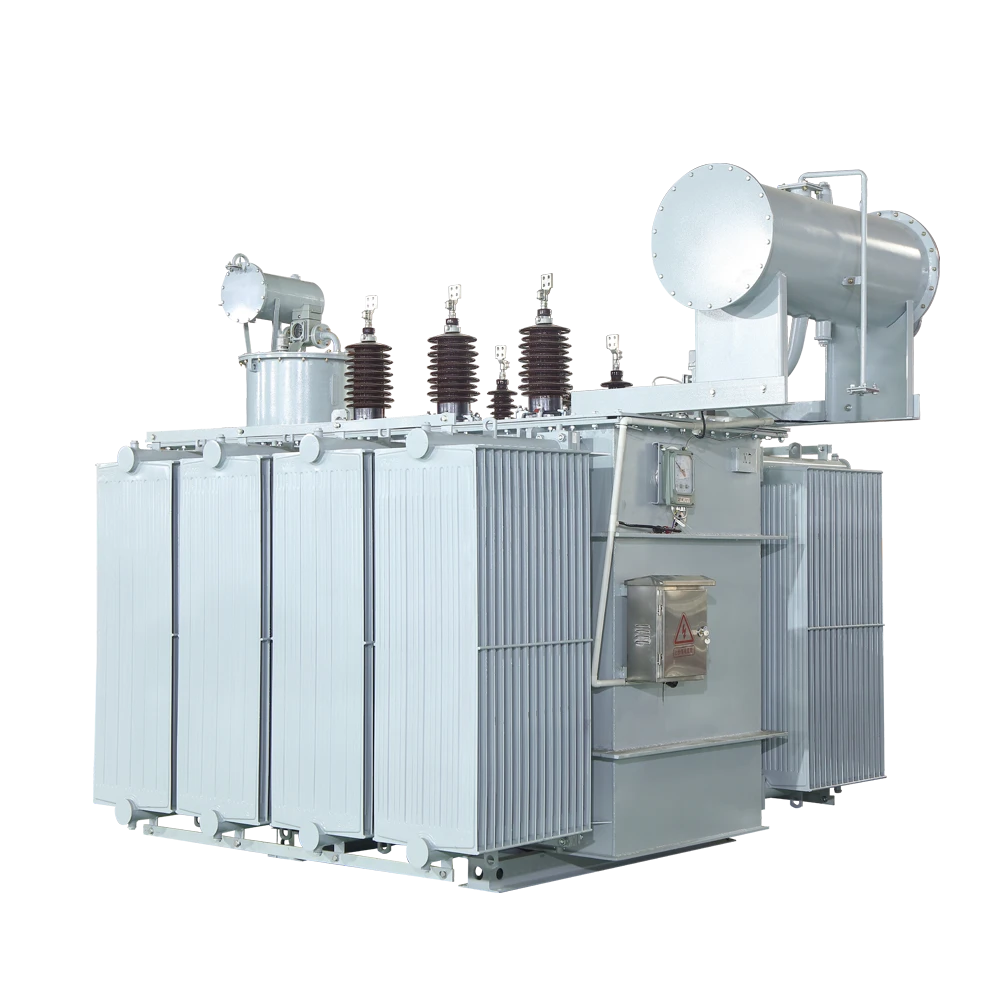
- Buchholz relay, winding/oil temperature indicators, pressure relief device
- Oil level indicator, dehydrating breather, bushings and CT accommodation
- Online monitoring provisions (e.g. dissolved gas analysis) where specified
The tender should name the full testing regime and distinguish routine, type, and special tests, plus witness rights and the format for submitted test reports.
- Routine tests: ratio/polarity, vector group check, impedance and loss tests, dielectric tests
- Type tests (temperature rise, lightning impulse) and special tests (short-circuit, sound level, DGA)
- Named standards (IEC 60076 series, IEEE C57.12.00/90), FAT procedure, and report timeline
Compliance Schedule, at a Glance
Every bidder should respond to the same schedule of values — this is the structure that lets a procurement team score technical bids side by side instead of reconciling ten different document formats.
| Specification | What the RFP Must Fix | Reference Standard |
|---|---|---|
| Rated power & voltage | kVA/MVA, voltage class, tap range, frequency | IEC 60076-1 / IEEE C57.12.00 |
| Insulation level | BIL, SIWV, power-frequency withstand | IEC 60071 / IEEE C57.12.00 |
| Vector group | Connection symbol, neutral grounding | IEC 60076-1 |
| Cooling method | Cooling code, ambient & altitude data | IEC 60076-1 |
| Tap changer | Type, range, step voltage, control scheme | IEC 60214 / IEEE C57.131 |
| Impedance & short-circuit | Target impedance, tolerance, withstand proof | IEC 60076-5 / IEEE C57.12.90 |
| Losses | No-load & load loss guarantees, capitalization formula | IEC 60076-1 / DOE 10 CFR 431 |
| Temperature rise | Top-oil, winding, hot-spot limits | IEC 60076-2 / IEEE C57.91 |
| Protection & accessories | Itemized device list, CT ratios and classes | IEC 60076 series |
| Testing | Routine/type/special tests, FAT and report timeline | IEC 60076-3/-5 / IEEE C57.12.90 |
Ask every bidder to mark each row compliant, deviating, or not offered. A deviation isn't automatically disqualifying — but an undeclared one, found after award, usually is a dispute.
Frequently Asked Questions
Which spec has the biggest cost impact?
Insulation level (BIL) and loss guarantees typically move price the most — BIL through clearance and bushing design, losses through both unit price and the capitalized cost added at evaluation.
Why does vector group cause so many delays?
It has to match the network the unit will parallel with. An error surfaces at commissioning, and by then the only fix is a rewind or replacement — not a field adjustment.
Do temperature limits change by climate?
The rise limits themselves are standardized, but sites with high ambient temperature or cyclic loading should require a loading study proving the design holds across the real profile, not just standard conditions.
What belongs in the test section?
Name routine, type, and special tests separately, state which apply to every unit versus a representative sample, and fix the FAT and witness-testing procedure before bids are due — not after award.
Fix the Number, Not the Description
Each of these ten specifications should resolve to a figure, a named standard, or a compliance checkbox that every bidder answers in the same format. That single discipline is what turns a stack of dissimilar quotations into a tender a procurement team can actually score — and what keeps a decades-long asset from carrying a decades-long dispute.