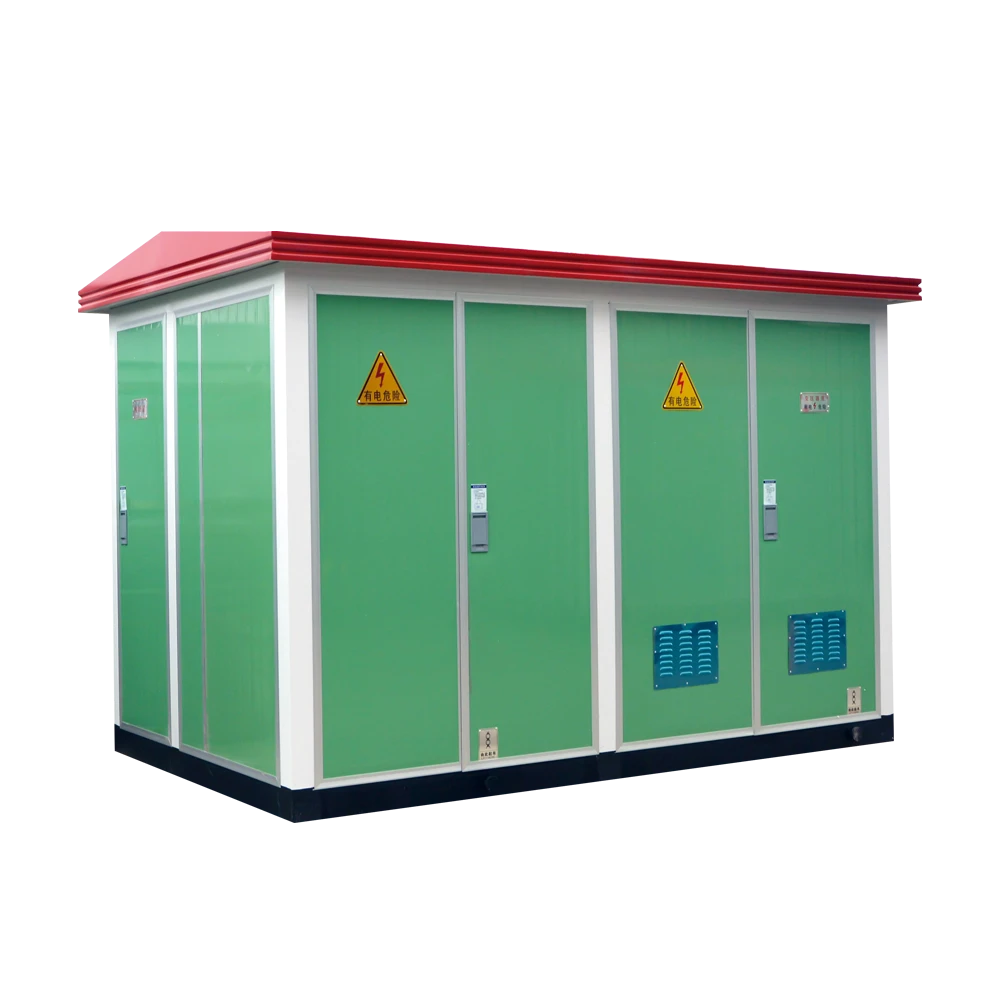
Why the Pressure Relief Valve Is the Last Mechanical Defense
Against Transformer Tank Rupture
An engineering breakdown of how the PRV responds to internal overpressure, why most utilities wire it to alarm rather than trip, and how its opening pressure is set against tank withstand strength. Written for the engineers who specify, commission, and maintain power transformers in demanding grid environments.
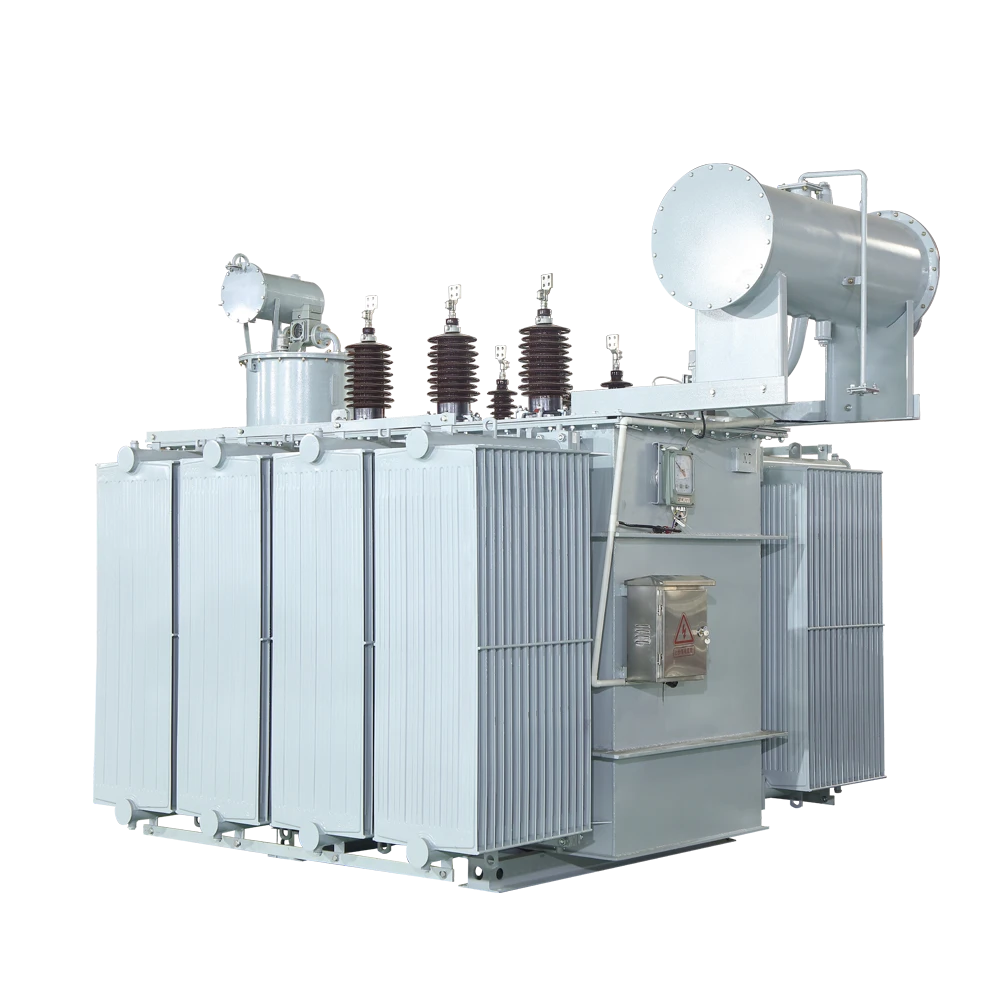
Haocheng low-loss OLTC transformer series — engineered with mechanical overpressure protection for utility and industrial grid applications across Africa, Central Asia, the Middle East, and Southeast Asia.
Most transformer failures don't begin as a breakdown. They begin as a pressure problem. When insulation fails or an inter-turn short develops, the surrounding oil heats and vaporizes fast enough to raise internal tank pressure within seconds — long before any protection relay has registered the fault. What happens to that pressure in the next few milliseconds often determines whether the event ends as a contained alarm or a ruptured tank.
How an Internal Fault Turns Into an Overpressure Event
An inter-turn fault or localized insulation breakdown produces intense, concentrated heating around the affected winding section. The oil in immediate contact with that hot spot vaporizes almost instantly, and the resulting gas expands far faster than it can dissipate through the tank's normal oil circulation paths.
The result is a rapid pressure rise inside a sealed steel vessel — and a sealed steel vessel under rising internal pressure will eventually fail at its weakest point: a welded seam, a gasket joint, or a flange connection. This is why transformer construction standards, including IEC 60076-1 and the equivalent GB/T 6451 in China, treat overpressure protection as a required design element rather than an optional accessory.
The fault itself rarely destroys the tank. What destroys the tank is pressure with nowhere to go.
Inside the Pressure Relief Valve: A Purely Mechanical Response
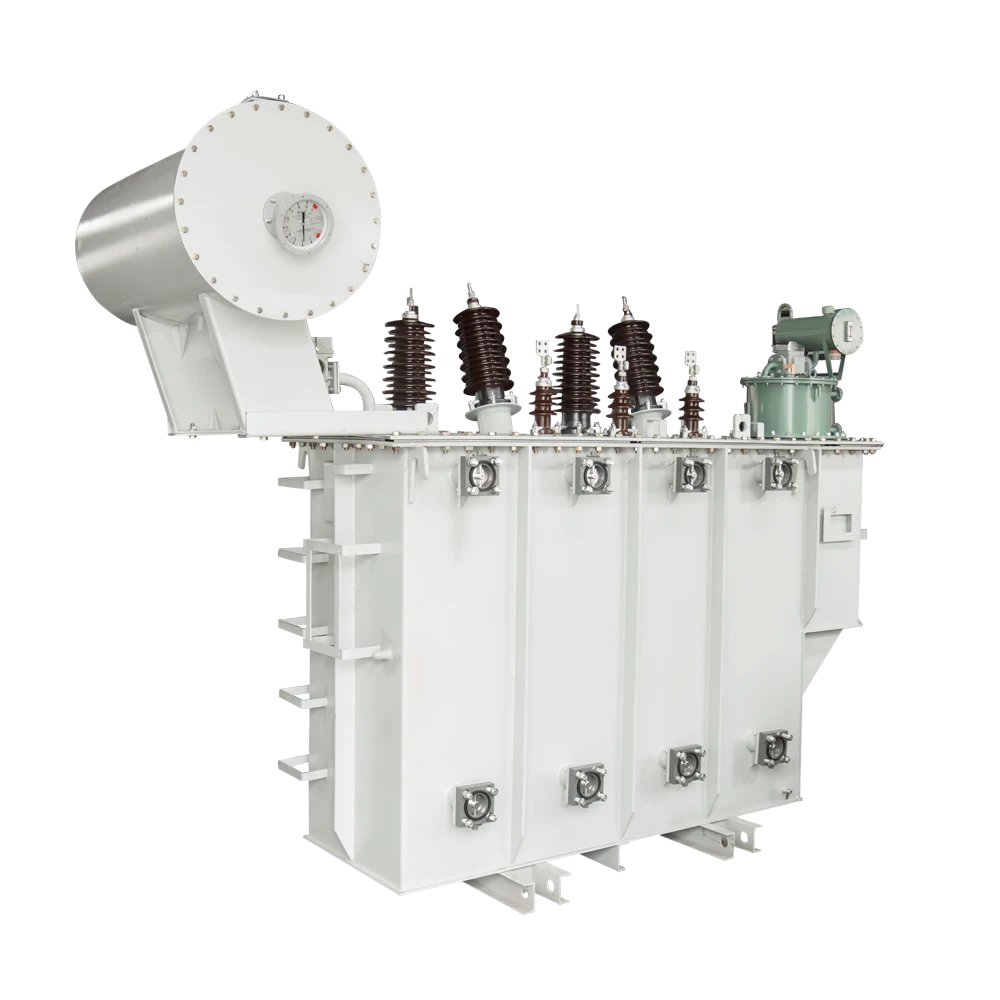
The pressure relief valve (PRV) is mounted directly on the tank and held closed by spring preload against a sealed diaphragm. It requires no power supply, no signal processing, and no control logic to operate — it is, by design, the one safety device that keeps working even if every electrical protection system on site has failed.
Pressure Builds
Oil vaporization from an internal fault — or, less often, thermal stress from a severe external short circuit — drives tank pressure upward within seconds.
Diaphragm Opens
Once pressure crosses the valve's preset threshold, the spring-loaded diaphragm lifts in milliseconds — no sensor, no relay, no delay in the chain.
Oil and Gas Vent
The pressurized oil-and-gas mixture is discharged through the open valve, bringing internal tank pressure back down before the structure is overstressed.
Valve Reseals
Once pressure returns within range, spring tension closes the diaphragm automatically — the valve is ready to act again without manual reset.
Because the PRV bypasses the entire sensing-and-relay chain used in electrical protection, it typically reacts faster than any electrically initiated trip — which is exactly why it's specified as a backstop, not a substitute, for differential or gas-accumulation protection.
Why PRV Output Is Wired Differently Across Substations
Not every PRV operation means there's an internal fault. External short-circuit faults can generate enough thermal stress on the windings to briefly trigger the valve even when the transformer itself is otherwise healthy. That single fact shapes how the PRV signal gets wired into protection logic — and it's not the same answer for every asset class.
On standard distribution transformers, the PRV signal is typically wired into an alarm circuit rather than a direct trip. This avoids taking a healthy unit out of service every time an external fault produces a transient pressure spike that doesn't reflect a real internal failure.
The trade-off is accepted because distribution transformers are usually one of several parallel paths feeding load, and an unnecessary outage carries a real cost in service interruption — without a matching safety benefit.
For large power transformers, unattended substations, or installations where several units could alarm at once, the calculus shifts. Here, the PRV signal is often combined with other protection functions — Buchholz gas-accumulation protection or differential protection, for example — in an AND-logic arrangement, or wired directly into the trip circuit.
The reasoning is straightforward: at this scale, the cost of a delayed isolation — tank rupture, oil spray, fire risk, extended unplanned downtime — outweighs the occasional inconvenience of an unnecessary trip, particularly where no operator is on site to respond manually to an alarm.
How the Valve's Opening Pressure Is Engineered
A PRV's opening pressure isn't a generic factory default — it's set relative to the specific tank it protects. Tank mechanical strength is established at the design stage and confirmed through hydraulic withstand testing. For a 35kV transformer rated above 4000 kVA, that withstand strength is commonly in the range of roughly 60 kPa, though the exact figure depends on tank geometry, plate thickness, and manufacturer-specific construction — it should always be verified against the unit's own test documentation rather than assumed from a general figure.
Against that baseline, the PRV opening pressure is typically set at 50–60% of the tank's rated withstand value. This margin is a deliberate engineering trade-off, not an arbitrary buffer.
| Setting Choice | Risk Introduced | Practical Consequence |
|---|---|---|
| Opening pressure set too low | Nuisance operation | Valve opens during normal load and temperature cycling, reducing equipment availability and triggering unnecessary maintenance callouts |
| Opening pressure set too high | Delayed protection | Valve fails to vent quickly enough during a genuine internal fault, allowing pressure to approach the tank's structural limit before relief occurs |
| Opening pressure at 50–60% of tank withstand | Balanced response | Wide enough margin to ride through normal operating fluctuation, low enough to vent well ahead of the tank's mechanical limit |
What Maintenance Teams Should Take Away
A PRV is easy to overlook precisely because it does its job quietly. A few points are worth keeping in front of any O&M team responsible for transformer protection coordination:
PRV Operation Is Not Proof of an Internal Fault
An alarm from the PRV warrants investigation, not automatic condemnation of the unit. Cross-check against DGA results, differential protection records, and load history before concluding there's a genuine internal failure.
The Valve Setting Belongs to the Tank, Not a Catalog Default
Opening pressure should be verified against the specific tank's withstand rating during commissioning and after any tank repair or modification — not assumed to carry over from a similar-looking unit.
Logic Configuration Should Match Asset Criticality
Alarm-only wiring that made sense for a small distribution unit may be the wrong call for a large power transformer at an unattended site. Review the alarm/trip decision whenever an asset's role in the network changes.
Mechanical Devices Still Need Inspection
A PRV that has never operated isn't necessarily a PRV in good condition. Periodic visual inspection of the diaphragm, gasket, and mounting hardware should be part of routine maintenance, not reserved for after a fault event.
Haocheng Transformer Series
Oil-immersed and dry-type distribution and power transformers, low-loss OLTC units, and turnkey substation packages — built with mechanical and electrical overpressure protection for demanding utility and industrial applications across Africa, Central Asia, the Middle East, and Southeast Asia.